

On July 20, the Water Innovation Fund—managed by Ofwat (the Water Services Regulation Authority in the UK)—announced the 20 shortlisted projects for the second Water Discovery Challenge. This global competition for water technology innovation aims to attract innovators from outside the water sector to the field and identify early-stage, innovative technologies capable of addressing major challenges facing the UK water industry. The 20 shortlisted projects are notable for their novelty; here, we share a few of them with you.
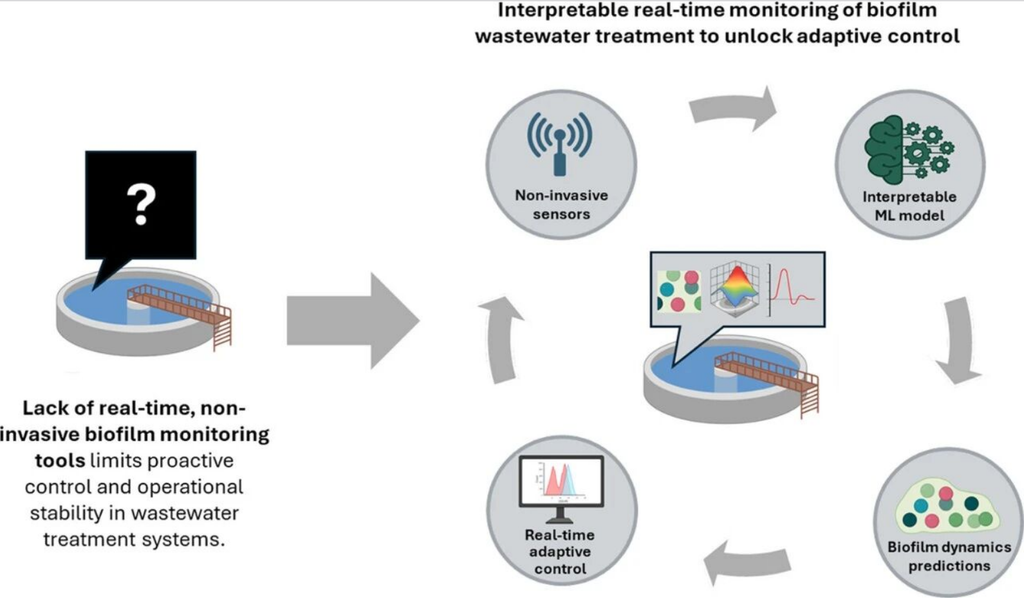
1. AI-based real-time biofilm monitoring system for enhanced wastewater treatment resilience
(1) Lead institution: University of Nottingham, UK
(2) Innovation: Transforming “invisible biofilms” into data observable in real time
(3) Technical principle: By combining non-invasive sensors with machine learning, the system infers changes in biofilm thickness, density, and structure from continuously collected data, enabling real-time monitoring of biofilm behavior without the need for frequent sampling.
(4) Reference: Fisher O J, Wang Y, Ahmed A. Making waves: Transforming biofilm-based wastewater treatment using machine learning-driven real-time monitoring[J]. Water Research, 2025: 124491.
2. Nature-based tertiary wastewater treatment technology for safe reclaimed water reuse
(1) Lead organization: Daphne Water Solutions Limited (UK environmental biotechnology company)
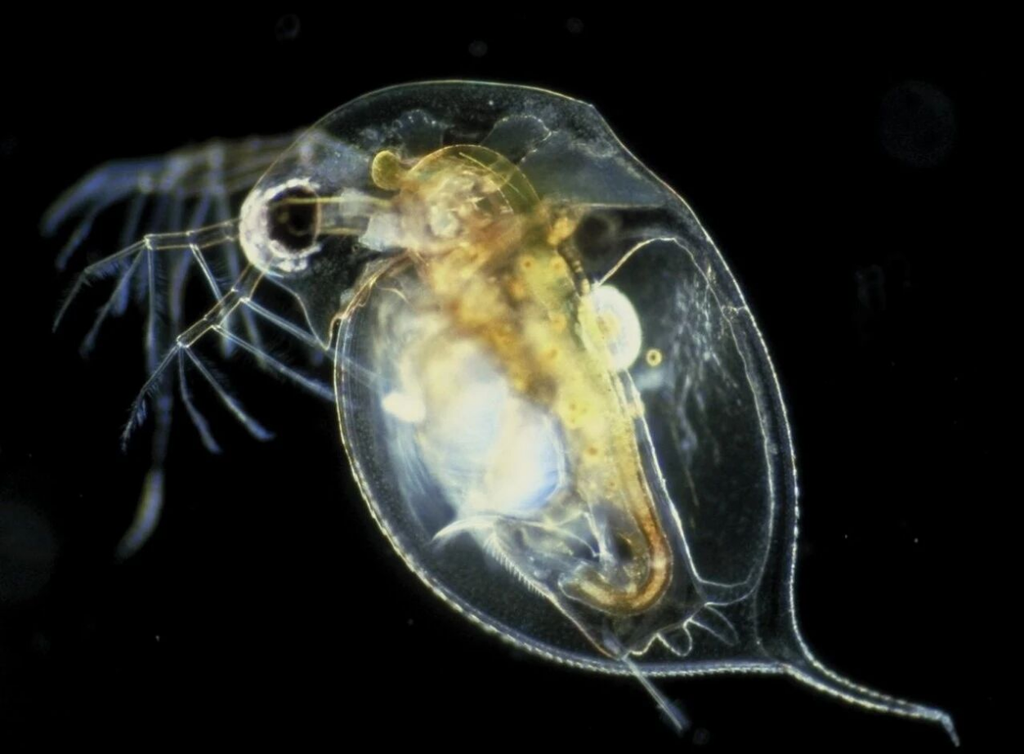
(2) Innovation: Utilization of water fleas (Daphnia) to remove PFAS, pharmaceuticals, and microplastics from wastewater
(3) Technical principle: Water fleas remove PFAS, pharmaceuticals, and microplastics through mechanisms such as ingestion and biosorption; unlike conventional advanced treatment, this process does not rely on energy-intensive core units like ozone, UV, or high-pressure membranes, thereby significantly reducing operational energy and chemical consumption.
(4) Reference: Abdullahi M, Stead I, Bennett S, et al. Harnessing water fleas for water reclamation: A nature-based tertiary wastewater treatment technology[J]. Science of the Total Environment, 2023, 905: 167224.
3. Achieving the resource utilization of anaerobic digestion residues by resolving the wastewater challenge associated with biocrude production.
(1) Lead organization: Wastewater Fuels (a UK clean-tech company).
(2) Innovation: Converting sludge into biocrude, while simultaneously treating the high-concentration wastewater generated during the process with bacteria to produce electricity.
(3) Technical principle: Many wastewater treatment plants utilize anaerobic digesters; the resulting solid-liquid mixture contains significant amounts of valuable organic substances such as lignin, proteins, and fats. This technology employs Hydrothermal Liquefaction (HTL), subjecting the aqueous organic matter to high-temperature and high-pressure conditions (250–374°C, 10–25 MPa) to yield products such as biocrude and hydrochar.
(4) Reference: SundarRajan P, Gopinath K P, Arun J, et al. Insights into valuing the aqueous phase derived from hydrothermal liquefaction [J]. Renewable and Sustainable Energy Reviews, 2021, 144: 111019.

4. Purification of sewage sludge and screening residues using Black Soldier Fly Larvae (BSFL)
(1) Lead organization: Entocycle Ltd (a UK-based insect biotechnology company)
(2) Innovation: Utilizing BSFL to process sludge and screening residues; this method achieves volume reduction while simultaneously removing or lowering levels of contaminants such as PFAS, microplastics, pathogens, and certain heavy metals. While the use of black soldier flies to process food waste is already commercialized, applying this technology to sewage treatment plant sludge is currently a hot topic in international research.
(3) Technical principle: The black soldier fly is a highly effective natural waste processor. The actual work is performed not by the black adult flies, but by the white larvae; as the larvae digest contaminants, they accumulate protein and fat in their bodies, making them suitable for use as animal feed.
(4) References: Jones A K, Nur-Aliah N A, Ivorra T, et al. Black soldier fly (Diptera: Stratiomyidae) reduction of different sludges, subsequent safety, and research gaps[J]. Journal of Environmental Management, 2024, 349: 119394.
5. Reinforcement materials for circular economy and carbon-negative wastewater treatment
(1) Lead entity: Carbogenics Ltd (a spin-out company from the University of Edinburgh, UK)
(2) Innovation: Functionalized biochar or filtration materials produced from fibrous waste—such as screenings—generated at wastewater treatment plants.
(3) Technical principle: FilaChar®, developed by Carbogenics Ltd, is a patent-pending carbon material classified as functionalized biochar. The production of one tonne of FilaChar biochar sequesters approximately three tonnes of CO₂ equivalent over the long term, giving the entire process net carbon-negative potential.
(4) Reference: — (Patented technology)
6. From Fixed Assets to Adaptive Infrastructure: A Modular, Deployable Platform for Resilience and Innovation
(1) Lead Organization: NUUV Ltd (UK-based water treatment technology company)
(2) Innovation: Traditional water treatment plant construction follows a sequence of design, procurement, civil works, installation, commissioning, and operation. If additional equipment or facilities are required after operations begin, expansion or renovation is necessary—effectively repeating the entire process and potentially disrupting production. NUUV proposes a new approach that transforms each stage of the wastewater treatment plant into a modular unit with standard interfaces, enabling “plug-and-play” functionality—much like USB ports on a computer, where peripherals such as a mouse, keyboard, or flash drive can be connected as needed.
(3) Technical Principle: — (This represents an operational service concept)
7. Ultrasound-based catalyst-free degradation technology for persistent organic pollutants
(1) Lead institution: University of Glasgow
(2) Innovation: Current processes for removing recalcitrant organic compounds and pollutants such as PFAS typically require catalysts or the addition of chemical agents, whereas the technology proposed by the University of Glasgow relies solely on ultrasound.
(3) Technical principle: The technology is based on acoustic cavitation—a process in which ultrasound waves propagating through a liquid cause micro-bubbles to rapidly grow and violently collapse, momentarily generating extreme temperatures, high pressures, and reactive free radicals that degrade pollutants in the water.
(4) Reference: Yusuf L A, Ertekin Z, Fletcher S, et al. Enhanced ultrasonic degradation of methylene blue using a catalyst-free dual-frequency treatment[J]. Ultrasonics Sonochemistry, 2024, 103: 106792.